
Jones County Criminal Docket Searches
Superior Court felony and misdemeanor records live with the Jones County Clerk of Superior Court Criminal Division. That office is the primary source. Its local route gives a limited criminal case search, though no proceeding images. Begin with a defendant name or a case number you already have. Then confirm the court and the calendar type. Jones entries often look like 2025-CR-409, but do not assume every record follows that exact sequence.
Each channel proves something different. The local portal can land an index-level result. re:SearchGA reaches only records filed through that provider. The free courthouse terminal and the clerk counter are the sound fallback. Use them when an image or entry is missing. Searching and getting certified copies are separate steps.
- Confirm that Superior Court, not a lower court, holds the matter.
- Try the official local criminal search with a name or case number.
- Check re:SearchGA with its provider limit in mind.
- Compare the result with the live criminal calendar.
- Use the terminal or clerk counter when online access falls short.
Jones Criminal Portal Boundaries
Think of the re:SearchGA entry point as an added route, not a complete statewide Jones County criminal docket. According to the clerk, it reaches criminal records filed through that service. Fees may apply. An empty result can come from provider coverage, a spelling slip, the wrong court choice, or an account limit. The official provider page shows the access layer a searcher meets before reaching a Jones County criminal docket.
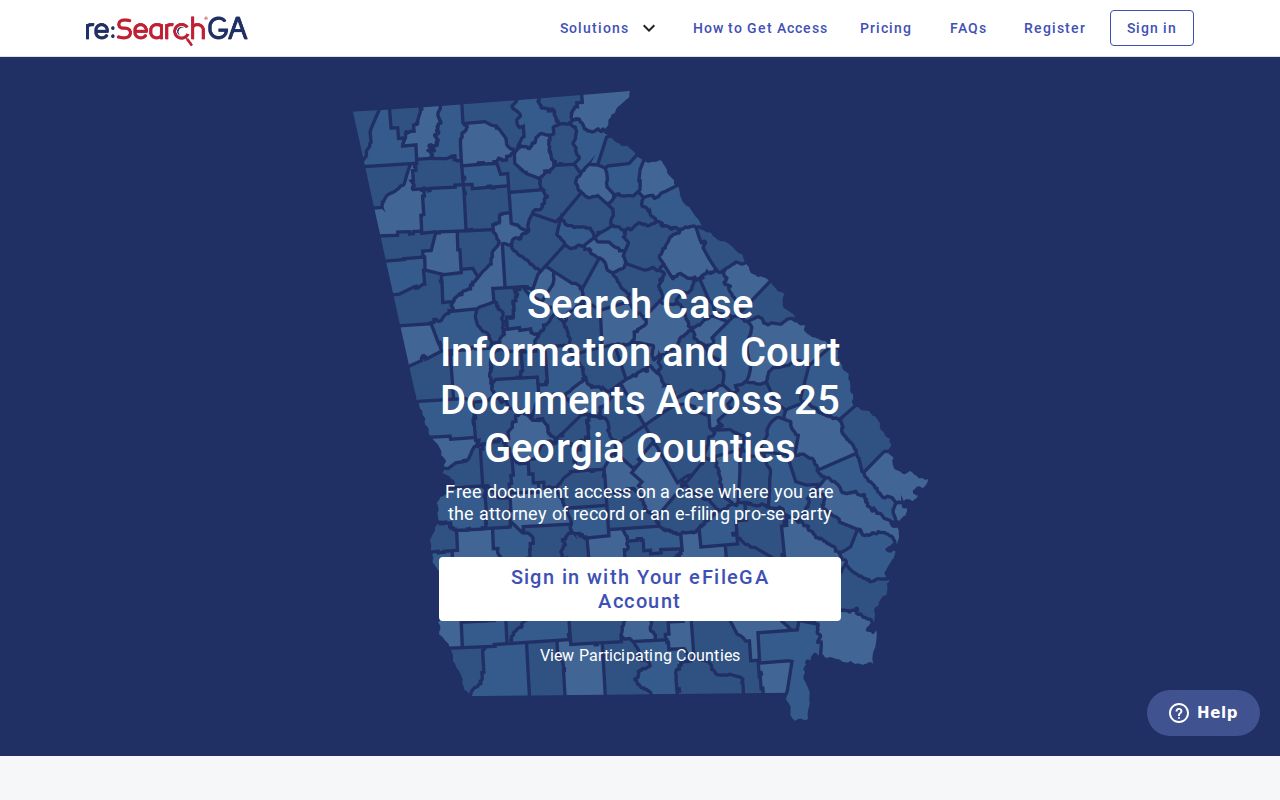
A provider result still needs a check against the clerk's index, calendar, or counter before anyone draws a firm conclusion. Georgia's Judicial Gateway is a provider directory. It is not one universal public case database.
Criminal Dockets: What They Show
A Jones County criminal docket is a dated record of events. The county arraignment calendar is a safe model. It names the Superior Court and the calendar type. The presiding judge, the calendar date, and the item number appear too. So do the filing date and the case number. Some entries carry offense-date and count fields. Lawyer roles and bond details also appear. A portal may add event dates and short entry descriptions on top.
| Case number | A local identifier often shown as YYYY-CR-NNN. |
|---|---|
| Setting | Arraignment, motion day, trial, or jury-calendar data. |
| Date fields | Filing, offense, and calendar dates serve different roles. |
| Counts | Numbered allegations and a generic charge description, not a finding of guilt. |
| Bond fields | Amount, date, and bondsman data, not a current custody guarantee. |
| Representation | Prosecutor and defense counsel or pro se status when shown. |
One calendar line is not the whole file. Orders, motions, exhibits, and images may take a trip to the counter or a copy request.
Jones Criminal Calendar Cutoff
The local Criminal Division posts one concrete scheduling rule. Its weekly cutoff is Tuesday at 5:00 p.m. for a Thursday motion-day calendar. That is a Jones County practice, not a statewide rule. File after that hour. The matter may not reach the expected Thursday list.
Confirm the live list. Use the clerk calendar index and ask the clerk about a late or changed setting. A docket event and posted calendar have related but different jobs.
Arraignment, motion, trial, and jury calendars each mark a distinct stage of a case. The docket stays the running record. A calendar just organizes the matters set for one court session.
Criminal Case Stages on the Docket
A Jones County criminal docket grows one entry at a time. Filing opens the record. Arraignment records the setting where the charge is called and plea procedure may begin. Pretrial and motion entries track the issues raised before trial. A plea or a trial leads toward disposition. That is the court's recorded resolution. Sentencing follows when a conviction calls for it.
Docket flow: Filing › Arraignment › Pretrial › Plea or Trial › Disposition › Sentencing
Cases rarely use every step in that order. A reset moves a setting, and a continuance postpones it. A dismissal ends a charge without a conviction. An order may resolve only a single issue, so read the date, the description, and the status together. For a broader lookup by name or number, turn to the Jones County docket search.
Jones Criminal Copy Charges
The criminal clerk page lists ordinary copies at $1.00 per page. Certification costs $2.50 and includes one copy page. Each added page is $1.00. Those are clerk charges, not provider fees, and the clerk may update them, so confirm the amount before ordering.
| Record item | Published charge |
|---|---|
| Ordinary copy | $1.00 per page |
| Certification with one page | $2.50 |
| Each added page | $1.00 |
A strong request names the case number, division, document, and date. Clerk staff will not research a case or interpret proceedings by phone. For an Open Records request, the office says it will send notice within three business days. It covers fees or a reason production cannot occur. Fees come due before fulfillment.
Jones County Criminal Docket Courts
Superior Court is the main route for an adult criminal docket. Its Criminal Division maintains felony and misdemeanor records, calendars, subpoenas, notices. It also handles criminal appeals. Jones County's official hierarchy lists no State Court. So do not assume a separate State Court index holds these files.
The lower courts still matter. Magistrate Court handles warrants, first appearances, committal hearings, bad-check matters, and county ordinances. Gray Municipal Court hears city traffic and ordinance cases. Juvenile Court follows its own protected process. A warrant or first appearance at Magistrate Court is not the later Superior Court docket. The official division source displays the clerk's access and calendar role.
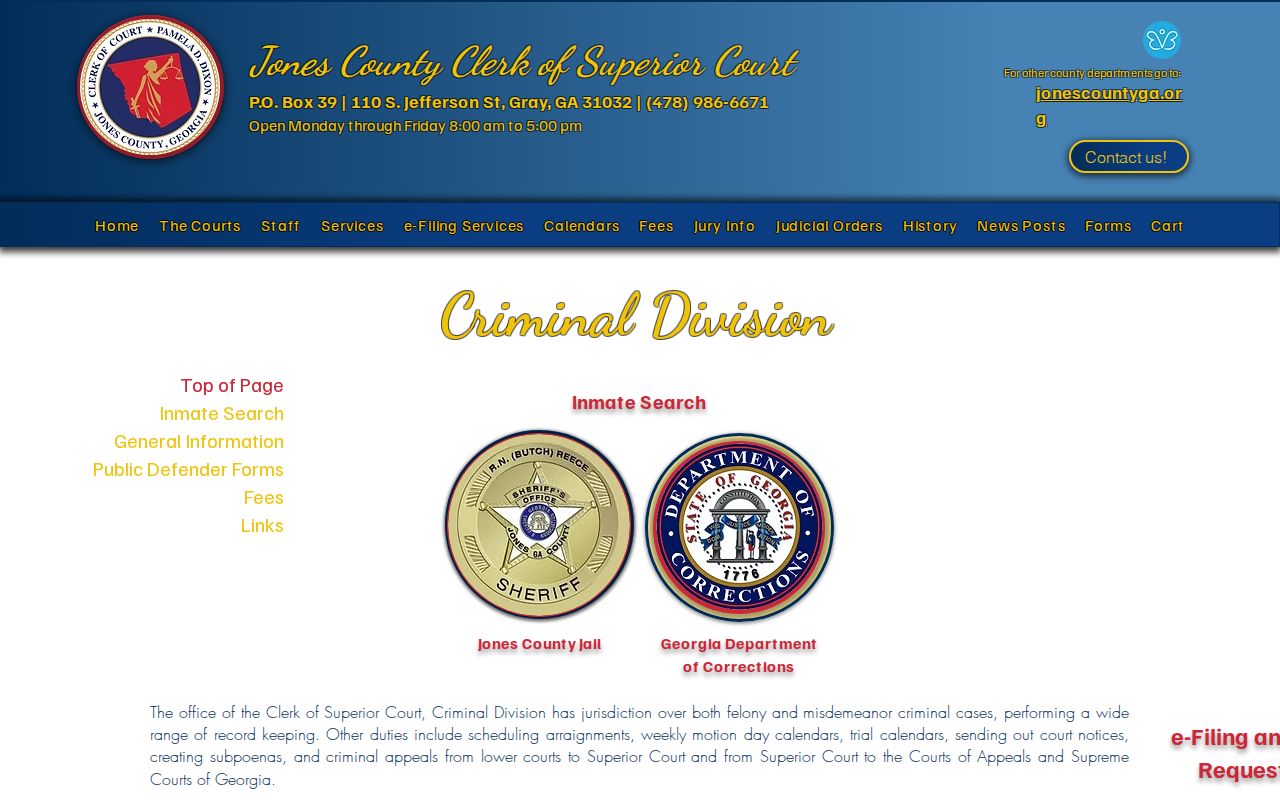
For current adult Superior Court criminal instructions in Jones County, that local page is where to begin.
Jones Criminal Calendar Terms
Short labels are easy to overread. They describe where a Jones County matter stands, not what anyone should infer about a person.
- Arraignment
- A setting where the charge is called and plea procedure may begin.
- Motion day
- A session for motions, governed locally by the published cutoff.
- Disposition
- The recorded resolution, such as dismissal, plea, or trial result.
- Pro se
- A party acting without a lawyer.
- Bond metadata
- Amount, date, or bondsman fields that do not guarantee current custody status.
Always read a term beside its dated event and source. A matter listed for arraignment was set for that session. The listing is not a conviction, and it should never be described as one.
Jones Adult and Juvenile Routes
Adult criminal files in Superior Court sit on the public side of the line. That holds most of the time. Law, rule, or a court order can still close them. Juvenile dockets start from the opposite premise. The Jones Juvenile Division describes those files as strictly protected. It points to O.C.G.A. §15-11-704 as the authority.
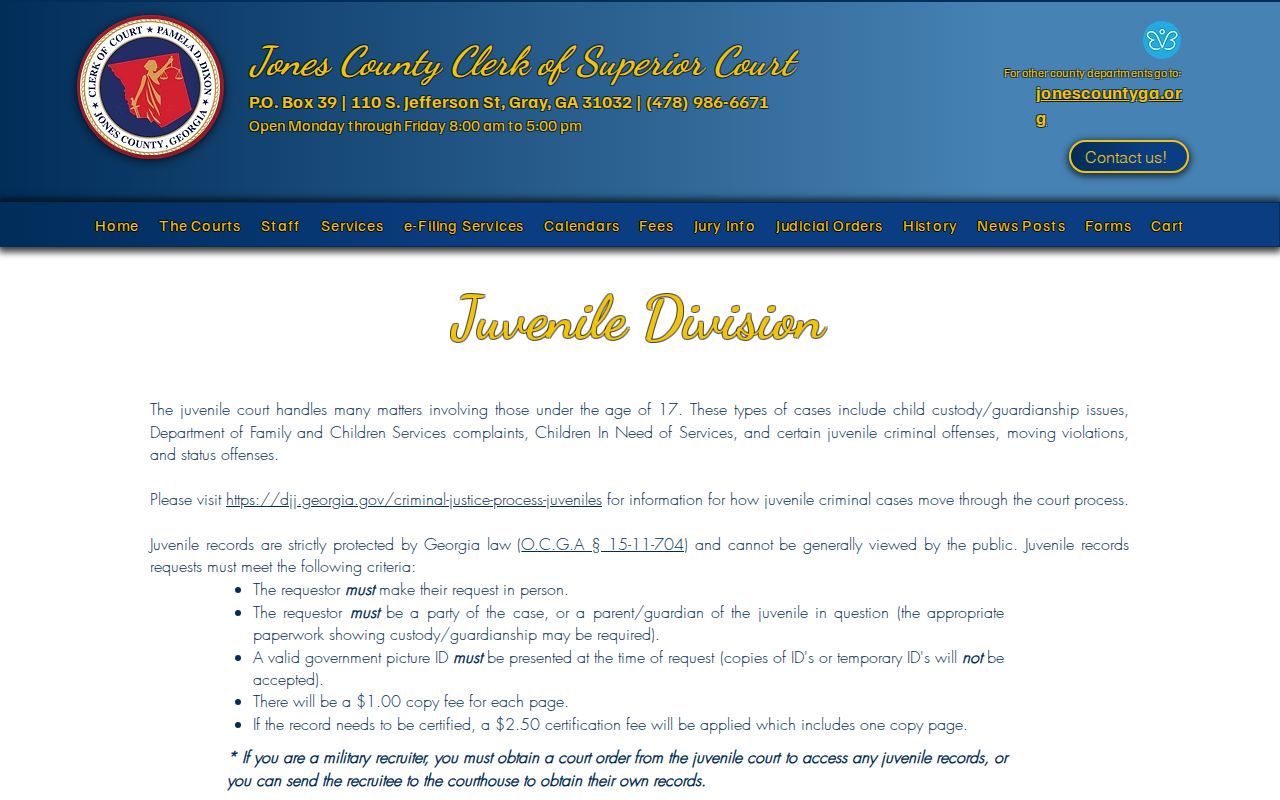
The official warning also closes a tempting loophole. An adult portal is never a way around juvenile confidentiality. Any authorized access has to go through Juvenile Court procedure itself.
Suppose a Jones County criminal docket will not come up. That gap could mean the case sits in another court, a provider's coverage falls short, an image is offline. Or the record is restricted. It never proves the case does not exist.
Access Rules for Criminal Dockets
Uniform Superior Court Rule 21 opens the courthouse door to the public. Law or court process can say otherwise. Open access still does not force every document or identifier onto the internet. The local portal, for instance, leaves out images of the proceedings. Even a public filing can appear with protected details redacted. Sealing and redaction work differently. A sealing order shuts the file down. Redaction strips only the protected content. It leaves the rest in view.
Key rules:
Uniform Superior Court Rules 21 and 21.6 address access, sealing, and protected identifiers.
O.C.G.A. §§50-18-70 and 50-18-71 frame Georgia Open Records requests and exemptions.
O.C.G.A. §15-11-704 supplies the juvenile rule cited by the clerk.
A criminal-history restriction under O.C.G.A. §35-3-37 is not the same thing as an index limit on a website. When in doubt about restricted, sealed, or redacted status, ask the clerk or read the controlling order.
Jones County Criminal Terminal Access
A Jones County criminal docket can look thin online. The free public terminal at the courthouse is the practical next step. It lets a searcher inspect local case information directly. Do not assume re:SearchGA holds every filing. Bring the exact case number if you can. With only a name in hand, narrow the search by court, rough filing period, or hearing date. The clerk warns that staff will not run broad case research, so a focused request has the best chance of finding the right file.
Finding an entry and ordering a copy are separate tasks. A visitor might work the terminal first, then request a specific document by name. Say whether a plain or certified copy is needed. For mail, follow the published Clerk of Superior Court route. Give staff enough detail to pull an existing record. A phone call can settle questions about procedure, hours, or whether to send a precise written request. Clerk staff cannot interpret the charge, bond, plea, or outcome, though.
This chain of fallbacks guards against false conclusions. Start with the local index, check the live calendar, lean on a provider where its coverage fits, work the courthouse terminal. Then request the exact court record. Each step narrows the question while pointing at the same Jones County criminal docket.